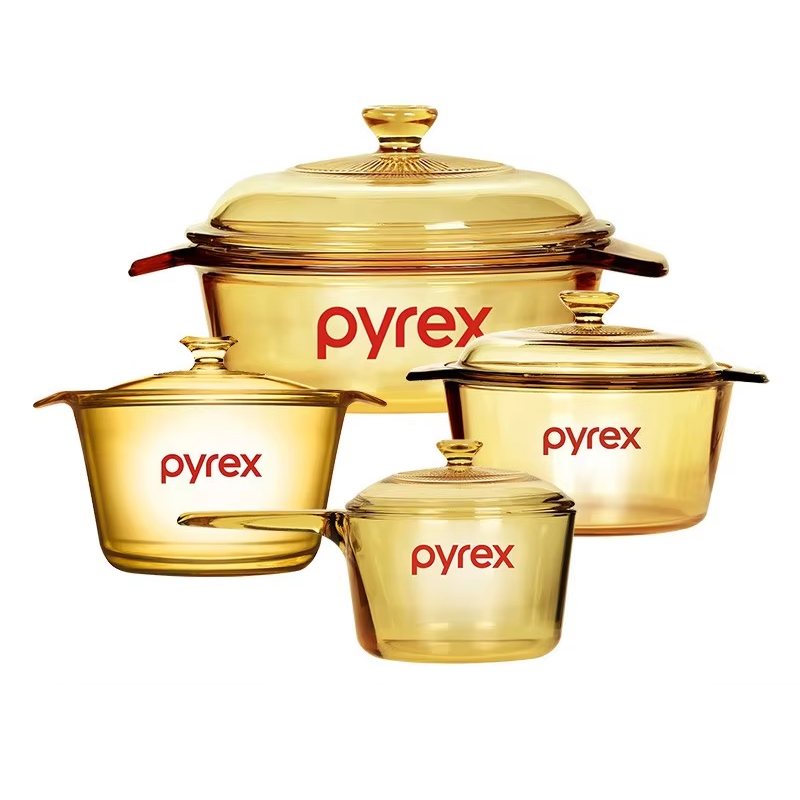
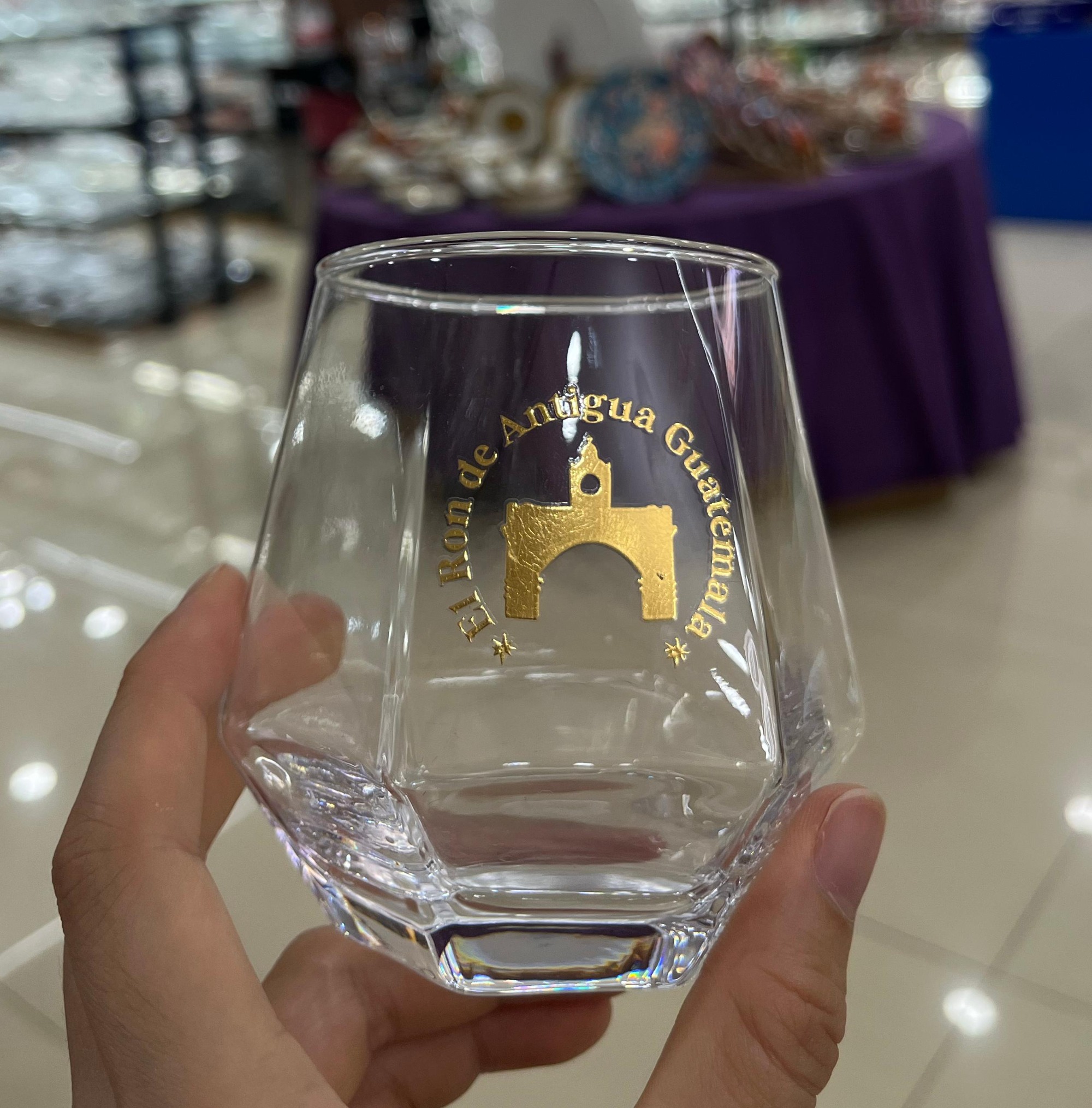
In all kinds of glass bottles or cups, in addition to the colorless and transparent glass bottles or glasses and glass utensils that we often see in our daily life, there are many colored wine glass , including brown glass medicine bottles, There are green beer bottles, blue oral liquid bottles and so on. In the cosmetic industry, there are blue and green essential oil bottles, amber cream glass bottles, and various colors dress up modern glass bottle packaging.
Where did these beautiful glass colors come from?
Ordinary glass bottles are made by smelting quartz sand, soda ash and limestone together. It is a mixture of silicates whose composition is not fixed. The first glass made by people was some small pieces of glass with poor transparency and some color. Its color is not added by people consciously, but the result of impure raw materials mixed with impurities. At that time, colored glass bottles were only used as decorations, and the requirements were not high. People only produced colored glass by accident. But the colored glass we require today has very high scientific requirements, which can only be produced after the secret of the color of the glass bottle is revealed.
After research, people found that if 0.4-0.7% colorant is added to the ingredients of ordinary glass, the glass can be colored. Colorants are mostly oxides of metals. We have already known that each metal element has its unique "spectral signature", so different metal oxides can show different colors. If these oxides are added to the glass batch, the glass will be colored. For example, adding chromium oxide (Cr2O3), the glass is now green; adding manganese dioxide (MnO2), the glass is purple; adding cobalt oxide (Co2O3), the glass is blue, and the protective goggles used by steelmakers and electric welders use this made of glass.
In fact, the color of glass bottles depends not only on the colorants added, but also by adjusting the valence of elements through the melting temperature and the properties of the furnace flame, so that the glass shows different colors. For example, copper in glass, if it exists in high-priced copper oxide, the glass will appear blue-green; in the presence of low-priced cuprous oxide (Cu2O), the glass will appear red. Sometimes, the glass cannot be displayed brilliantly after one melting, and the second heating is required to make the glass display its color. This is the case with the precious golden red glass, which is made by adding a small amount of gold to ordinary glass ingredients. After the first melting, gold is distributed in the glass in the form of atoms, and the glass does not show color at this time; when it is heated again to a temperature close to softening, the gold atoms in it are aggregated into colloidal particles, and the glass appears at this time. up beautiful red.
Now, people use the oxides of rare earth elements as colorants to make various high-grade colored glasses. The color glass doped with rare earth elements has a clear and bright color, and even changes color under different light. For example, neodymium oxide glass has this characteristic. It appears purple-red under sunlight and blue-purple under fluorescence, which is very beautiful. There is a kind of glass that changes color with the intensity of light. People use it as the lens of glasses and the window glass of houses. Using this kind of glass as window glass can keep a certain amount of brightness in the room, and there is no need to use curtains to shade the sun, so some people call it "automatic curtain". It can block the passage of ultraviolet rays in the sun. After libraries and museums are equipped with this kind of glass, books and cultural relics can be protected from ultraviolet rays.
In addition to rare earth elements, directly adding tungsten and platinum to glass can also make color-changing glass.
Ordinary pigments are faded by the ultraviolet rays in the sun or the action of oxygen and sulfur dioxide in the air; but colored glass can withstand the sun and rain because the oxides such as metals that play a coloring role have been fused with the glass. Drench and keep its beautiful youthful appearance forever. With the development of science and technology, the variety of colored glass will become more and more colorful, and our life will also become colorful because of its embellishment and decoration.
Simply put, glass that presents different colors by absorbing, reflecting, and transmitting light of a certain wavelength. It is mainly used for the doors and windows of public facilities in buildings and the facing materials for interior and exterior decoration. There are two processes of glass coloring: material coloring and surface coloring.
material coloring
The process of adding substances that can form colored ions, compound colloids, and metal colloid particles to glass raw materials to make them appear in different colors can be divided into four types according to the coloring mechanism.
① Ion coloring. It is a compound that adds transition elements such as cobalt (Co), manganese (Mn), nickel (Ni), iron (Fe), copper (Cu) to the glass frit, and exists in the glass in an ion state, because their valence electrons are in the The transition between different energy levels (ground state and excited state) causes selective absorption of visible light and coloring, such as cobalt blue, manganese violet, nickel green and other colored glasses.
② Compound colloidal particle coloring. Adding sulfur or selenium compounds (such as CdS, CdSe, etc.) CdSe grows into larger colloidal particles, and the glass is colored due to light scattering, such as selenium red, cadmium yellow and other colored glasses.
③Coloring of metal colloidal particles. It is to add oxides that are easy to decompose into metal state (such as gold, silver, copper and other oxides) to glass raw materials, first dissolve in the glass in ionic state, and then transform into atomic state after heat treatment and aggregate and grow into colloidal particles. Light scattering causes the absorption of visible light to be colored, such as golden red, copper red, silver yellow and other colored glasses.
④ Semiconductor coloring. It is to add CdS, CdSe, CdTe and other colorants to the glass frit, and there is no absorption peak in the visible light region, but a continuous absorption region, and the light-transmitting region and the absorption region are a very steep dividing line. Different from the aforementioned coloring mechanisms, its color changes with the ratio of CdS/CdSe. For example, when there is more CdS, it is close to orange, when CdSe is more, it is red, and when CdTe is more, it is black, that is, they are based on O2-, S2-, Se2-, Te2 The order of - moves to the long wave direction. According to the semiconductor energy band theory, the electrophilic potential of these anions becomes smaller in turn, and their valence electrons can be excited to the conduction band (excited state) by sequentially using lower energy (near visible light) light, making it truncate the wave limit Entering the visible light region will cause the glass to be colored.
surface coloring
It is to coat metal, metal oxide, etc. on the glass surface to form a transparent, translucent or opaque color coating. Coating SnCl4 and FeCl3 on the glass surface by chemical thermal decomposition method can prepare blue SnO2 film and golden Fe2O3 film respectively. Metal films such as gold, silver, copper or metal oxide films such as In2O3, SnO2, TiO2 can be prepared by vacuum evaporation, vacuum cathode sputtering, reactive sputtering, etc. Different colors of interference film and reflective film. In the float glass production line, the electric float method or thermal spraying method can be used to make colored glass with colored surface. It can also be printed or sprayed with glass color glaze to make glazed glass bottles.


 09June 2023
0Comments
1441Views
09June 2023
0Comments
1441Views