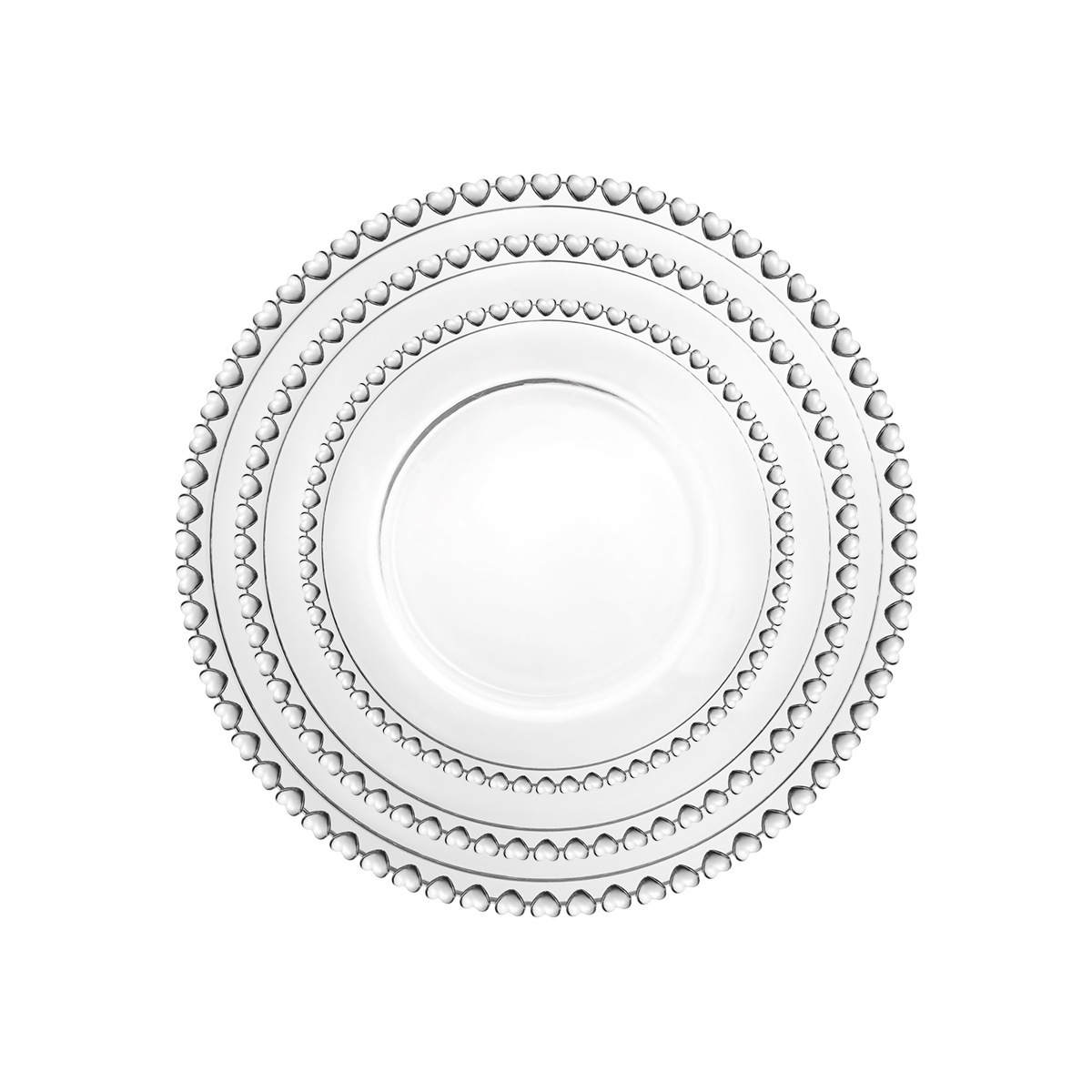
The core advantages of tempered
glass baking trays compared to stainless steel baking trays lie in
visual cooking, easy cleaning, and good food compatibility, making them more suitable for scenarios where attention to cooking details and health is a priority.
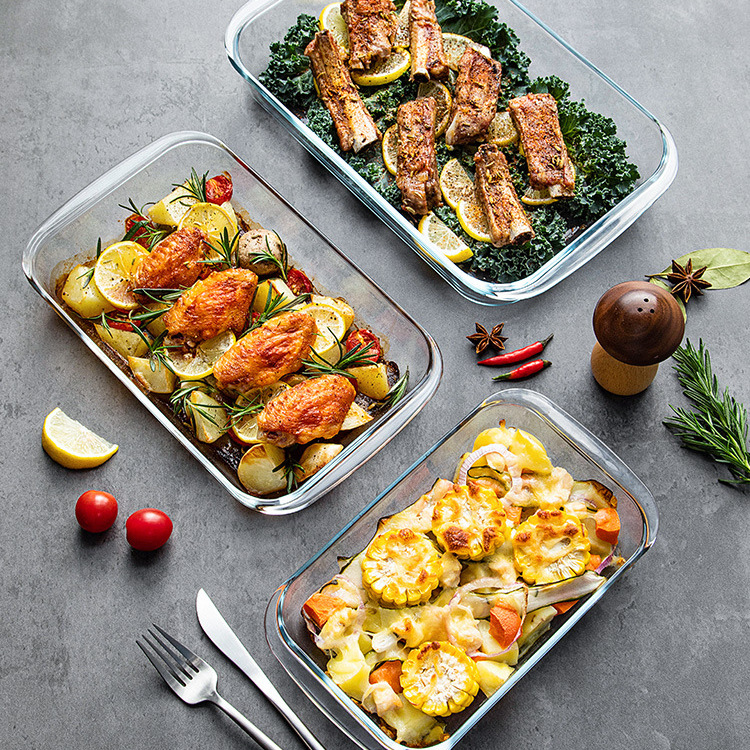
Tempered glass is transparent, allowing you to directly observe changes in the browning and doneness of food inside the tray without frequently opening the oven door.
- For example, when baking cakes or pizzas, you can monitor the crispness of the surface in real time, avoiding sudden drops in oven temperature caused by opening the door, which could affect the texture of the finished product.
- Stainless steel baking trays are opaque, requiring judgment based on experience or repeated oven checks, which easily leads to uneven heating of the food.
The surface of tempered glass is dense and smooth, so oil stains do not easily penetrate or adhere, resulting in lower cleaning difficulty.
- Light oil stains can be wiped clean with a damp cloth, and even heavy stains can be easily scrubbed off after soaking, with no scratches easily formed.
- If stainless steel baking trays are not cleaned in a timely manner, oil stains tend to form stubborn grease deposits. Over long - term use, scratches may also trap dirt, requiring more effort for cleaning.
Tempered glass is an inert material that does not react chemically with acidic, alkaline, or high - temperature foods, making it more suitable for storing or roasting special ingredients.
- For instance, when roasting acidic foods such as tomatoes, lemons, or marinated meats in vinegar, there is no need to worry about the leaching of metal ions, ensuring food safety.
- Some low - cost stainless steel baking trays (not made of food - grade 304/316 stainless steel) may have the risk of trace metal leaching when in contact with acidic foods or exposed to high temperatures.
Tempered glass has relatively mild thermal conductivity, so cooked food can retain its temperature in the tray for a longer time. Moreover, no water droplets easily condense on the bottom of the tray after cooling.
- It is suitable for being directly taken to the table for serving after roasting, eliminating the need for frequent food transfer. Stainless steel baking trays cool down quickly, and water droplets are likely to form due to temperature differences after cooling, which affects the texture of the food.
Would you like me to sort out a Chinese - English comparison table of the advantages of tempered glass baking trays and stainless steel baking trays that includes key dimensions such as "material characteristics, applicable scenarios, and cleaning difficulty", to help you quickly refer to it when making a selection?


 10October 2025
0Comments
537Views
10October 2025
0Comments
537Views