Choosing a borosilicate double-walled glass cup isn’t just about picking a “pretty vessel”—it’s about balancing durability, safety, and practicality to match your daily needs. With so many options on the market, from budget-friendly picks to premium designs, it’s easy to feel overwhelmed. But by focusing on key factors like material authenticity, structural quality, and functional details, you can find a cup that lasts long, performs well, and enhances your drinking experience. Here’s a step-by-step guide to help you make the right choice.
1. First, Verify the Authenticity of Borosilicate Glass
The core advantage of this type of cup lies in its borosilicate glass material—so ensuring you’re not buying a cheap “ordinary double-walled glass” pretending to be borosilicate is critical. Here’s how to check:
- Look for clear labeling: Reputable brands will clearly mark “borosilicate glass” on the product packaging, bottom of the cup, or product description. Avoid cups that only say “heat-resistant glass” without specifying “borosilicate”—ordinary heat-resistant glass can’t match its temperature resistance (borosilicate typically handles -20℃ to 150℃ sudden changes, while ordinary glass may crack at 50℃ differences).
- Test the weight and transparency: Borosilicate glass is lighter than ordinary glass of the same thickness, thanks to its lower density. Hold it in your hand—if it feels surprisingly light for its size, that’s a good sign. It also has higher transparency (up to 92% light transmittance), so the cup should look crystal-clear, with no foggy spots, bubbles, or impurities in the glass.
- Check the seal of the hollow layer: The space between the two glass layers must be fully sealed. If you see moisture, fog, or dust inside the hollow layer, it means the seal is broken. A faulty seal will ruin insulation (hot drinks cool fast, cold drinks get warm) and may cause the cup to crack when heated. Tilt the cup and look closely at the edges—there should be no gaps or visible glue marks where the two layers are joined.
- Feel the thickness of the glass: Both the inner and outer walls should be evenly thick. Run your finger along the rim and cup body—there should be no thin, weak spots (these are prone to breaking when dropped or heated). The rim, in particular, should be smooth and rounded (no sharp edges that scratch your lips when drinking).
- Test the anti-scalding and anti-condensation effect: If you’re buying in person, pour hot water (around 80℃) into the cup. Wait 30 seconds, then touch the outer wall—it should feel only slightly warm, not burning hot. For cold drinks, pour in ice water and wait a minute; the outer wall should stay dry (no condensation beads). If either test fails, the double-walled structure is poorly designed.
-
-
3. Prioritize Functional Details That Match Your Lifestyle
A good borosilicate double-walled cup should fit how you actually use it—consider these practical features:
- Capacity: Choose based on your daily needs. For office use, 300–400ml is ideal (holds a standard cup of coffee or tea without being too bulky). For home use or outdoor picnics, 450–500ml works if you want fewer refills. Avoid cups smaller than 250ml (not enough for a single serving) or larger than 600ml (too heavy when full).
- Lid (if needed): If you plan to use it for commuting or travel, pick a cup with a leak-proof lid. The lid should be made of food-grade silicone or PP (look for “BPA-free” labeling) and fit tightly—twist or press it to ensure no gaps. Test the lid by turning the cup upside down (with a little water inside); no leaks mean it’s reliable. For home use, a lid may not be necessary, but if you want to keep dust out, a simple glass or silicone lid works.
- Base stability: The bottom of the cup should be thick enough (at least 3mm) and flat. Place it on a smooth table—if it wobbles, it’s prone to tipping over. Some cups have a non-slip silicone pad on the base, which is great for offices (prevents sliding when typing) or homes with kids.
- Ease of cleaning: Look for cups with a wide enough mouth (at least 7cm in diameter) so you can fit a sponge or brush inside to clean the inner wall. Avoid cups with narrow necks or complex inner shapes (like built-in filters that are hard to reach)—these trap coffee stains or tea residue. Most borosilicate double-walled cups are dishwasher-safe, but check the label first (some with lids may require hand-washing the lid).
-
4. Consider Brand Reputation and After-Sales Service
Borosilicate glass requires precise manufacturing (especially for double-walled sealing), so reputable brands are more likely to deliver quality:
- Stick to trusted brands: Brands like Bodum, Zwilling, or domestic options like Libbey (for budget-friendly) or EDELITA (specialized in glassware) have stricter quality control. Avoid no-name brands sold on random marketplaces—they often cut corners on material and craftsmanship.
- Read customer reviews: Look for feedback on durability (“How long has it lasted?” “Did it break easily?”) and performance (“Does it keep drinks hot?” “Is the outer wall really dry?”). Pay attention to common complaints—if multiple reviewers mention broken seals or cracked glass, steer clear.
- Check the warranty: A good brand will offer a 6–12 month warranty for manufacturing defects (like seal failure or glass cracks without misuse). Avoid cups with no warranty—if it breaks soon after purchase, you’ll have no recourse.
-
5. Avoid Common Pitfalls
- Don’t prioritize price over quality: A cheap borosilicate double-walled cup (under 10) may use thin glass or have poor seals—you’ll end up replacing it quickly, which costs more in the long run. Invest in a mid-range option (15–$30) from a trusted brand; it will last 2–3 years with proper care.
- Don’t ignore the lid material: Even if the cup is borosilicate, a low-quality lid (with BPA or weak silicone) can ruin the experience. Always check the lid’s material certification.
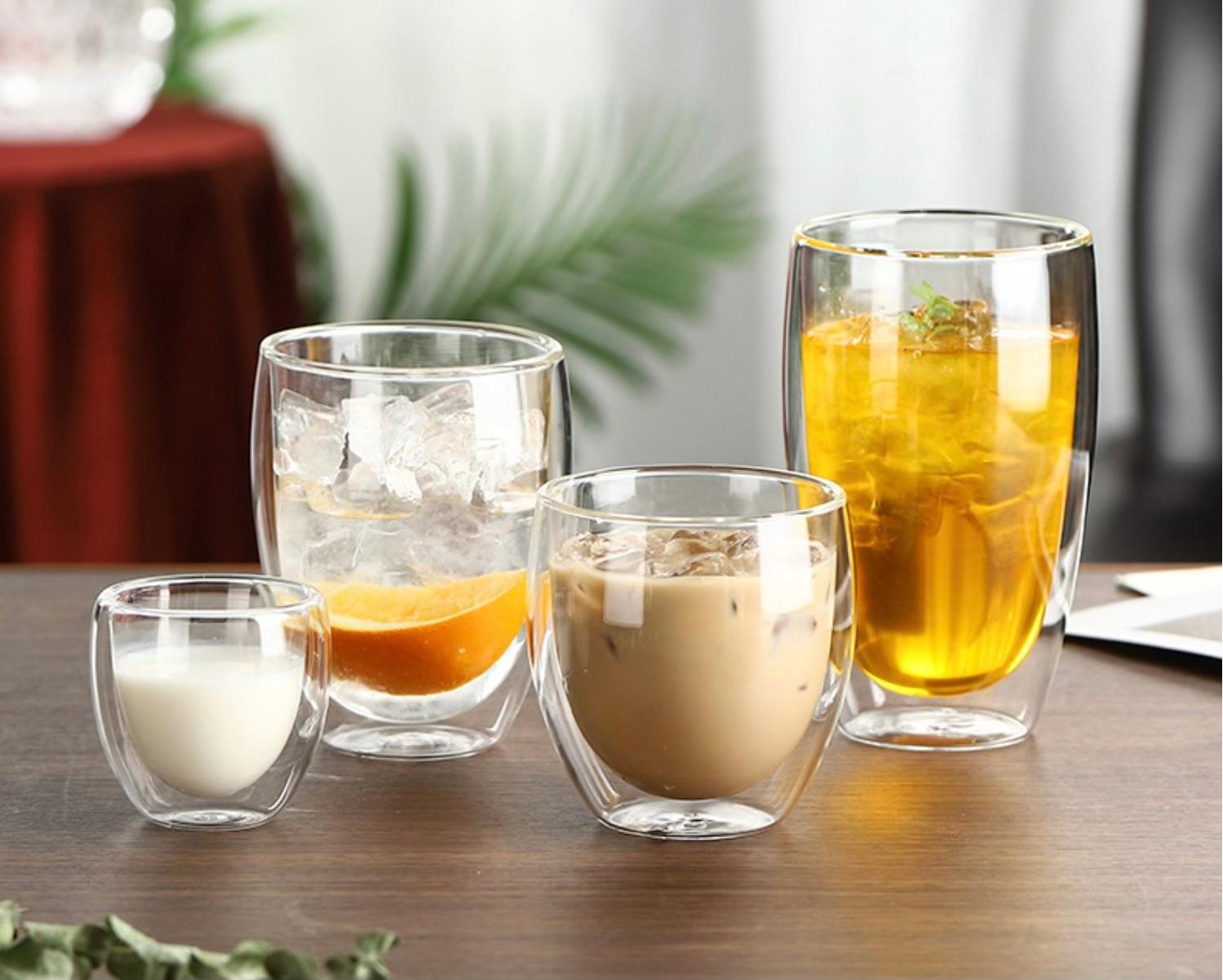
- Don’t buy overly decorative designs: Cups with complex patterns, gold plating, or painted exteriors may look nice, but the paint can chip off (especially in the dishwasher) and may contain lead. Opt for plain, transparent designs—they’re safer and showcase the “floating drink” effect of double-walled glass.
Final Tip: Think About Your Daily Routine
Before buying, ask yourself: Will I use this for hot drinks only, or both hot and cold? Do I need to carry it in a bag? Do I have kids who might knock it over? Answering these questions will help you narrow down choices. For example, if you commute, a leak-proof lid and 350ml capacity are non-negotiable. If you have kids, pick a cup with a thicker outer wall and non-slip base.
By focusing on material authenticity, structural quality, functional details, and brand trust, you’ll find a borosilicate double-walled glass cup that’s not just a drinkware item—but a reliable, long-lasting companion for your daily sips